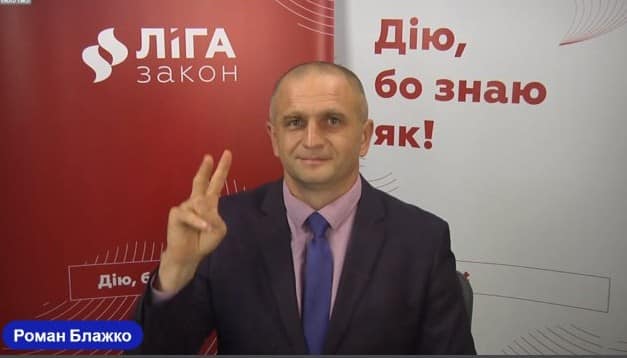
Friday, April 19, 2024

Notable Tax Disputes of 2023

I had a pleasure of speaking at the meeting of the Tax and Customs Law Committee of the Ukrainian Bar Association on the topic of the most notable court jurisprudence of the Supreme Court in tax disputes in 2023.

In particular, the following issues decided by the Supreme Court in 2023 came into the focus of my attention:

1) The possibility of recovering damages from the state revenues in the form of a contractual fine paid to the purchaser for the untimely registration of the VAT invoice - the judgement of the Grand Chamber of the Supreme Court dated 1 March 2023 in case No. 925/556/21 initiated by "Manufacturing enterprise "Impuls Plus", LLC on the lack of such a possibility in view of the absence of a cause-and-effect relationship between the suspension of the registration of the VAT invoice and the payment of the fine;

2) The possibility of invalidating a contract concluded between two taxpayers at the request of the tax authority - the judgement of the Commercial Court of Cassation dated 29 August 2023 in case No. 910/5958/20 initiated by the Main Department of the State Tax Service of Ukraine in the city of Kyiv on rejecting the tax authority's claim due to the fact that it did not manage to prove a violation of its civil rights and interests in the course of concluding the disputed contract by the taxpayers;

3) The deductibility for the purpose of corporate income tax of non-refundable financial assistance provided to a related company - the judgement of the Administrative Court of Cassation dated 30 May 2023 in case No. 580/3758/19 initiated by "Sokar Petroleum"LLC in favor of such a deductibility;

4) The possibility of a taxpayer to challenge its inclusion in the plan-schedule of scheduled tax inspections - the judgement of the Administrative Court of Cassation dated 4 October 2023 in case No. 480/12329/21 initiated by "Sumy Development Company", LLC stating that this is an incorrect remedy that cannot be applied; and

5) The possibility of applying the principle of stability of tax legislation - the judgement of the Administrative Court of Cassation (the entire "tax" chamber involved) dated 26 September 2023 in case No. 640/7520/21 initiated by "AERO TELECOM", LLC on the impossibility of the application of this principle.

Friday, December 29, 2023

Abolishment of Moratorium on Tax Audits

I had the pleasure of speaking at the meeting of the Committee on Tax and Customs Law of the Ukrainian Bar Association on the topic of canceling the moratorium on tax audits.

The current situation is such that starting from 8 December 2023 the moratorium on tax audits practically has not been in existence.

Tax authorities were given back almost all the possibilities for conducting tax audits that they had had before the introduction of the "coronavirus” moratorium on tax audits in March 2020. The latter gradually grew into a "military" moratorium on tax audits.

From 8 December 2023 onwards only some minor manifestations of the previously famous moratorium remains to exist, which concern:

- Restrictions on conducting tax audits of individual entrepreneurs of the first and second groups until 1 December 2024;

- Restrictions on conducting tax audits of taxpayers whose tax addresses are temporarily occupied territories, places of military actions or possible places of military actions; and

- Limitation of the scope of scheduled documentary tax audits to certain categories of taxpayers listed in the law until 31 December 2024. At the same time, such categories listed in the law cover a very significant share of taxpayers who may be subject to scheduled tax audits.

Since one of the grounds for conducting a scheduled tax audit is nowadays a low burden of corporate income tax, in order to understand the risks of undergoing the scheduled audit, it is worthwhile for taxpayers to familiarize themselves with the data on the tax burden in the relevant industries. Such data are available on the official website of the State Tax Service of Ukraine at the following link: https://tax.gov.ua/diyalnist-/rezalt/736958.html?fbclid=IwAR2yMavFMtihmn4GI9-ADt5nIjqWtePindAEZBjBmubox75_eebJljF9Rgg


Tuesday, October 3, 2023

Gilt in Tax Relations

My sincere thanks go to the Ukrainian Bar Association for the great opportunity to speak at the tax forum.

The topic of my speech was guilt in tax relations.

After the small tax reform of 2020 (Act No. 466), a lot has changed in this area. At the same time, the key change was undoubtedly the division of tax offenses into intentional and other ones, as well as the provision of more significant fines for intentional offenses.

Sunday, May 7, 2023

Taxation of Foreign Income of Individuals

It was my pleasure to speak at the meeting of the committee on tax and customs law of the Ukrainian Bar Association on the topic of taxation of foreign income of individuals. 

The most complex and at the same time hottest issue in this context is the issue of taxation of Ukrainian refugees in foreign countries. 

Generally, foreign countries treat Ukrainian refugees as their tax residents. Ukraine is not ready to give up the tax revenues and continues considering such refugees as its own tax residents as well.  

The solution to these intricacies lies in the realm of double tax treaties. At the same time, the least favorable situation seems to exist for the refugee who keeps working remotely in Ukraine under an employment contract.  

There is a risk that, in addition to salary taxes withheld in Ukraine, such a refugee may face in the country of his/her foreign stay foreign income tax and possibly social contributions in respect of his/her Ukrainian salary.

Wednesday, April 5, 2023

Changes to Procedure for Suspension of Registration of VAT Invoices

I was glad to speak at the meeting of the Committee on Tax and Custom Law of the Ukrainian Bar Association on the topic of the suspension of the registration of VAT invoices.

My speech, in particular, concerned the changes to the procedure for the suspension of the registration of VAT invoices brought by the Resolution of the Cabinet of Ministers of Ukraine No. 1428 dated 23 December 2022. The Resolution entered into force on 11 January 2023. It became a kind of compromise between the interests of business and the government in the light of the unprecedented fiscal pressure caused by the system of the suspension of the registration of VAT invoices in the second half of 2022.

Below is a brief summary of the most important changes introduced by the Resolution:

1) Automatic registration of a VAT invoice in case the tax authorities accept the data table of the VAT taxable person subject to certain conditions (does not apply where the regional commission of the tax authorities has already made a decision to decline the registration of the VAT invoice).

2) Unconditional registration of a VAT invoice. It is possible if there is no decision on the compliance of the VAT taxable person with the criteria of riskiness and the CEO of the taxable person holds a similar position in no more than three VAT taxable persons. For unconditional registration, the amount of supplies in one concerned VAT invoice must not exceed UAH 5,000, and the total monthly amount of supplies must not exceed UAH 500,000.

3) The obligation to indicate in the decision on compliance of the VAT taxable person with the criteria of riskiness the detailed information according to which the compliance of the VAT taxable person with a certain criterion of riskiness is established, including: (i) the type of the transaction (purchase or supply); (ii) period of the transaction; (iii) the code of the product involved; and (iv) information about the counterparty of the VAT taxable person involved in the risky transaction.

4) In the context of the notorious paragraph 8 of the criteria of riskiness, a list of tax information codes was introduced (approved by the order of the State Tax Service of Ukraine dated 11 January 2023 No. 17). The tax information code must be indicated in the decision on compliance of the VAT taxable person with the criteria of riskiness based on the specified paragraph 8. The list of codes practically does not change the situation in favor of VAT taxable persons. It has 18 codes which cover almost all the grounds for the riskiness of the VAT taxable persons that the tax authorities can come up with. In the list, for example, you can find an insufficient number of labor resources, the implementation of the transaction with the counterparty in respect of which a decision has already been made on compliance with the criteria of riskiness, and a number of other common grounds for "riskiness" used by the tax authorities in practice.

Saturday, December 31, 2022

Court Jurisprudence on Procedural Aspects of Tax Audits

It was my pleasure to speak at the meeting of the Committee on Tax and Customs Law of the Ukrainian Bar Association on the topic: " Court Jurisprudence on Procedural Aspects of Tax Audits."

A key issue in the relevant field during 2022 was the issue of canceling tax assessment notices issued premised on the results of tax audits carried out on the basis of the Resolution of the Cabinet of Ministers of Ukraine dated 2 February 2021 No. 89 "On shortening the period of validity of the restriction regarding the moratorium on carrying out certain types of audits".

Currently, this Resolution continues to be reversed in accordance with the judgment of the Sixth Administrative Court of Appeal dated 5 July 2022 in case No. 816/228/17 brought by Prommetsplav, LLC. Furthermore, the jurisprudence of the Administrative Cassation Court (cases No. 640/16093/21 and 160/24072/21) shows that the very fact of conducting a tax audit on the basis of the said Resolution of the Cabinet of Ministers of Ukraine is sufficient for treating the relevant tax assessment notices as illegal.

Saturday, October 15, 2022

Changes in VAT Regulation During the Period of the Application of Martial Law

I was glad to speak at the meeting of the committee on tax and customs law of the Ukrainian Bar Association on the topic: "Changes in VAT Regulation During the Period of the Application of Martial Law".

Since the beginning of the full-scale invasion of the Russian Federation into Ukraine on 24 February 2022, a large number of amendments have been made to the Tax Code of Ukraine regarding VAT. 

The following three are the most notable among those amendments:

1) Introduction of a temporary reduced VAT rate of 7% for motor fuels; 

2) Governing the issue of the enjoyment of input VAT deduction without a registered VAT invoice for February-May 2022; and

3) Suspension of the operation of the VAT refund procedure for the period until July 2022.


Wednesday, August 24, 2022

The Court Jurisprudence in Cases Involving the Sale of Apartments via Individuals

The resolution of the "Tax Chamber" of the Cassation Administrative Court of 23 May 2022 in case No 810/3116/18 has really made a great gift to real estate developers that had been selling apartments through individuals.

In this resolution the justices concluded that the sellers of real estate that are not registered as individual entrepreneurs (IEs) cannot be taxed as IEs, even if they carry out systematic sales of real estate, which "de facto" make up an entrepreneurial activity. 

This resolution also came in handy for us. Using it as one of the key arguments, we managed to win the case in the Sixth Appellate Administrative Court in August 2022.

However, in my opinion, it is too early to "chill out" in this category of cases and rely solely on the said resolution of the "Tax Chamber". 

A very large percentage of the justices (six justices out of fifteen) did not agree with the majority and expressed a dissenting opinion. So, if such a case is assigned to the dissenting justices, there is a great chance that they will direct the case to the Grand Chamber.

If this happens and the Grand Chamber accept the case for its consideration, it is possible that the approach can change radically.

Wednesday, October 13, 2021

Webinar on Tax Initiatives in 2021

Holding webinars based on the "Liga-Zakon"  platform is always a day of pleasure for me. 

This time I was talking about tax initiatives in 2021, namely:

- tax amnesty;

- Bill No  5600; and

- the so-called tax "on Google".

As for the tax amnesty, those sufficiently lucky to have accumulated enough assets not to be automatically considered amnestied are advised to take a wait-and-see approach.

In particular, it will be expedient to wait for the Cabinet of Ministers of Ukraine to develop a Bill on strengthening control over personal income taxation. The existence of this Bill will make sure a more accurate assessment of the risks for those who do not want to apply the tax amnesty.


Sunday, October 3, 2021

Speaking at the meeting of the Ukrainian Bar Association on tax litigation

It was my pleasure to speak at the meeting of the Committee on Tax and Customs Law of the Bar Association of Ukraine on the topic of court jurisprudence in tax litigation.

My speech was dedicated to:

1) The court jurisprudence in cases related to challenging the tax authorities' orders on appointing tax inspections in accordance with the Resolution of the Cabinet of Ministers of Ukraine (CMU) of 3 February 2021 No 89. This Resolution narrowed the scope of the moratorium on tax inspections set out for the period of the quarantine. The Resolution, among other things, allows carrying out scheduled tax inspections.

Court jurisprudence currently exists at the level of the courts of appeals at the maximum. Such cases have not yet been decided by the Supreme Court.

The court jurisprudence at the level of the courts of appeal is ambiguous. In some cases, the courts side with the taxpayers, recognizing that the CMU's resolution cannot narrow the scope of the moratorium provided for in the Transitional Provisions of the Tax Code of Ukraine. In other cases, on the contrary, the courts of appeal hold that the narrowing of the moratorium introduced by the CMU's resolution is legal. They refer to the fact that the CMU's resolution was adopted in accordance with the direct provision of the Law of Ukraine of 17 September 2020 No 909-IX (on amendments to the Law on State Budget of Ukraine for 2020).

It is interesting that, as a rule, the Sixth Administrative Court of Appeal (Kyiv) demonstrates a loyal approach to the taxpayers. The Fifth (Odessa) and Second (Kharkiv) Administrative Courts of Appeal, on the other hand, are more likely to share the logic of the tax authorities.

2) The court jurisprudence on the application of indirect methods of determining taxable income. 

This court jurisprudence has emerged in recent years in connection with the attempts of the tax authorities to issue additional tax assessments to statesmen when some discrepancies are found between their official income and the value of assets in the electronic declarations.

The relevance of this court jurisprudence has greatly increased in connection with the implementation of the tax amnesty in Ukraine starting from September 2021.

The court jurisprudence in this category of cases is already present at the level of the Administrative Court of Cassation (a division of the Supreme Court) and is absolutely favourable for the taxpayers. The court finds the use of indirect methods of determining income illegal.

Saturday, April 10, 2021

Webinar on Court Jurisprudence in Tax Litigation

I was delighted to hold a webinar at the Business Consulting Academy, dedicated to the judicial practice of resolving tax disputes.

The webinar focused on exemplary tax disputes and tax disputes resolved by the Grand Chamber of the Supreme Court.

Among the important judgments rendered by the Grand Chamber in 2020, it is necessary to note the following three:

- The resolution of 7 April 2020 in case No 910/4590/19 initiated by LLC "Askop-Ukraine" => administrative courts have jurisdiction over the cases involving the recovery under section 625 of the Civil Code of Ukraine of annual 3% interest and inflation charges in case of the failure of the state authorities to provide VAT refund on a timely manner; 

- The resolution of 1 July 2020 in case No 804/4602/16 initiated by LLC “Salamandra Insurance Company” => the failure of a bank to remit a tax liability to the state revenues based on the payment instruction of a taxpayer exempts the taxpayer from penalties and daily default interest, but does not exempt him from paying to the state revenues the tax liability itself; and 

- The resolution of 18 November 2020 in case No 813/5892/15 brought by LLC “Yablunevyi Dar” => orders on appointing tax inspections issued by the tax authorities based on court orders in criminal cases cannot be challenged in any type of court proceedings in Ukraine.

Saturday, March 20, 2021

Webinar on Taxation of Transactions with Non-residents in 2021

I was my pleasure to hold a webinar hosted by Liga-Zakon on the topic of: "Taxation of Transactions with Non-residents in 2021."

The main conclusions drawn from the webinar:

- It is very desirable during 2021 to decide on the retention / liquidation of foreign legal entities that could potentially fall under the Ukrainian CFC rules. The Tax Code of Ukraine exempts the receipts obtained in the aftermath of the liquidation of such legal entities in 2021 from personal income tax.

- When structuring transactions on the sale of Ukrainian legal entities through foreign holding companies (the sale of shares in a foreign company that controls a Ukrainian company), it may now be necessary to pay a withholding tax in Ukraine.

- It should be taken into account that the tax difference of 30% is now applicable not only to buying goods (works, services) from non-residents belonging to the "blacklisted” jurisdictions” or “blacklisted” entity types, but also to selling goods (works, services) to such non-residents.

- The deviation of prices in controlled transactions (transfer pricing) from the “arm’s length” prices now triggers not only additional corporate income tax charges, but also additional withholding tax charges in connection with the qualification of such a deviation as constructive dividends.
 

Sunday, January 31, 2021

Court Jurisprudence in Tax Disputes Involving an International Element

I want to thank the Business Consulting Academy for the opportunity to speak at a webinar on the topic of court jurisprudence in tax disputes involving an international element. 

In the context of the webinar, I would like to point out that at the end of 2020, the Supreme Court published its Review of court jurisprudence in the field of transfer pricing and international taxation. The review (in Ukrainian) is available at this link: https://supreme.court.gov.ua/userfiles/media/new_folder_for_uploads/supreme/Ohliad_transfertne_tsinoutvorennia_1.pdf.

Unfortunately, I am supposed to say that the document does not live up to the expectations that arise from reading its name. It cannot be called even a more or less comprehensive review of the court jurisprudence of the resolution of tax disputes in the field of international taxation. 

In general, the review discusses only the topic of transfer pricing, including quoting a number of unnecessary, in my opinion, for such a review, court judgements on certain obvious and non-debatable issues. 

Other issues of international taxation are not covered in the review at all, except for the two judgements concerned with permanent establishments and one judgement concerned with a tax difference arising from purchasing goods from counterparties registered in low-tax jurisdictions. 

Sunday, July 26, 2020

CASE LAW IN TAX LITIGATION: GRAND CHAMBER AND MODEL CASES

I was pleased to hold a webinar on the case law of the Supreme Court in tax disputes for the students of the tax course of the Business Consulting Academy. 

This time model (exemplary) cases and cases considered/to be soon considered by the Grand Chamber were dealt with. 

While there are not many  model cases in the field of tax litigation  (one two and that is all), the situation with the cases of the Grand Chamber is much more interesting.

Among the most recent cases of the Grand Chamber, it is worth especially noting the following two:

1) Case No. 804/4602/16 intiated by Salamander Insurance Company, LLC. In this case, the Grand Chamber on 1 July 2020 put an end to disputes related to the failure of banks to execute wire transfer instructions of the taxpayers on transferring taxes to the state revenues. The conclusion of the Grand Chamber is unlikely to please such taxpayers. It ruled that the  taxpayers are exempt from fines and daily default interest, but the tax liability itself must be paid once more by the taxpayers to the state revenues. 

2) Case No. 826/9464/18 initiated Ukrvydavpoligrafiya. The case has not been resolved yet. The consideration at the Grand Chamber is scheduled for 26 August  2020. This is really one of those cases being of a great significance to tax lawyers. The case addresses the issues that are extremely important for tax litigation in general. In particular, the Grand Chamber will opine on: (i) the possibility of challenging the tax audit orders after their execution and (ii) the possibility of invoking procedural violations as legal grounds for the cancellation of tax assessments in the event that the taxpayer allowed the tax authorities to carry out the tax audit.

Saturday, July 18, 2020

TAX LITIGATION: MITIGATION OF QUARANTINE

One can say that yesterday (17 July 2020) went down in history as a day of serious mitigation of the quarantine in the area of tax and, in fact, other litigation.

On this day, the Act of 18 June 2020 No. 731-IX came into force. This Act:

- Repeals the provision of the Code of Administrative Procedure of Ukraine and other procedural codes  on the  extension of almost all procedural time-limits for the full  duration of the  quarantine.

- Lays down that the procedural time-limits extended in accordance with the above-mentioned repealed provision for the full duration of the quarantine expire twenty days after the entry into force of the Act, i.e. on 6 August 2020.

- Instead of the automatic extension of procedural time-limits for the time-frame of the quarantine, introduces the possibility of their renewal by the court.  The renewal does not promise to be easy. To renew a procedural time-limit, it is necessary to satisfy the court that the time-limit has not been obeyed due to the very effect of the  measures introduced in connection with the quarantine.

There turn out to be some curiosities. The Act provides for an absolutely illogical rule that the court may extend the procedural time-limits within 20 days after the entry into force of the Act on the grounds specified by the Act.

What was meant by this is not clear at all. 

First, as noted above, over these 20 days, the procedural time-limits are considered to be automatically extended by virtue of the direct provision of the Act.

Second, the Act sets forth only the grounds for renewal, not the extension of procedural time-limits.

Please note that the resumption  of the application of  procedural time-limits only relates to court tax disputes. In the field of administrative appeals, everything remains unchanged.

Paragraph 52-8 of subsection 10 of the Transitional Provisions of the Tax Code of Ukraine continues to apply. According to this paragraph, the time-limits for administrative appeals are considered to be suspended until the last calendar day of the month in which the quarantine expires.

Saturday, May 16, 2020

BILL No 1210: PERSONAL INCOME TAX (INTERNAL TAXATION)

This is to continue the series of publications on tax changes provided by the Bill № 1210.

This time here is the publication № 2 on changes in the field of personal income tax (limited to internal taxation only):

- The extension of the preferential taxation of real estate items to items of unfinished construction (paragraph 172.1 of the Tax Code of Ukraine);

- The application of the 18% rate to the sale of third and subsequent vehicles by the taxpayer within the same year (paragraph 173.2 of the Tax Code of Ukraine);

- On releasing a mortgage debt, the only mortgage principal will fall under taxation (paragraph 164.2.17 of the Tax Code of Ukraine);

- Fourfold increase in fines for failure to submit or submitting an improperly filled form № 1 DF (Article 119 of the Tax Code of Ukraine);

- The introduction of depreciation of trucks (impossibility of depreciation of cars still remains in place) for individual entrepreneurs liable to the general system of taxation; the only costs of repair but not those of overhaul as before can be directly (without depreciation) attributed to the costs of the taxable period (paragraph 177.4.6 of the Tax Code of Ukraine);

- The elimination of the need to file a tax return in cases of sale / gift / exchange of property that has not triggered any tax liabilities to be remitted to the state revenues (paragraph 179.2 of the Tax Code of Ukraine). 

Thursday, May 14, 2020

BILL No 1210: CORPORATE INCOME TAX (INTERNAL TAXATION)

Unfortunately, the situation with signing the Bill № 1210 by the President of Ukraine, which significantly “redraws” the Tax Code of Ukraine, is still unclear.

At the same time, given that the chances of its signing by the President are, in my opinion, are fairly high, I decided to publish a series of concise publications outlining the key changes that await all of us in Ukraine, if the Bill becomes an Act.

Publication № 1: corporate income tax (internal taxation):

- The threshold of annual revenue for those taxpayers who may not take into account tax differences and file tax returns once a year increases from UAH 20 to 40 million (paragraph 134.1.1 and paragraph 137.5 of the Tax Code);

- The value of assets that count as fixed assets and are subject to depreciation increases from UAH 6,000 to UAH 20,000 (paragraph 14.1.138 of the Tax Code).

Tuesday, May 12, 2020

TAX LITIGATION AND QUARANTINE


I was delighted to speak at an e-meeting of the Committee on Tax and Customs Law of the Ukrainian Bar Association dedicated to the issues of tax changes adopted in response to the quarantine period.

My speach concerned specifics of tax litigation over the quarantine period.

Very briefly, such specifics in accordance with the Act of Ukraine of 30 March 2020 No 540-IX are as follows:

- deadlines for consideration of administrative complaints by the tax authorities have been suspended until 31 May 2020;

- due to the imperfection of the wording of the Act it is disputable whether the deadlines for filing administrative complaints by taxpayers have been also suspend until 31 May 2020; 

- the time-limits for bringing lawsuits against tax assessments, time-limits for bringing appeal and cassation claims as well as a number of other procedural time-limits have been suspended for the whole period of the quarantine;

- the possibility of participation in court hearings via a videoconference (EasyCon or other software) has been provided for the period of the quarantine.

Monday, December 2, 2019

Tax Reform from "Servant of the People"

On 14 November 2019 I was delighted  to conduct a LIGA-ZAKON webinar on the topic of the tax reform from "Servant of the People".

During the webinar, the changes that had already been implemented and those that are just planned were considered. The former, in particular, embraced the decriminalization of fake entrepreneurship and raising the thresholds for liability for tax evasion. Among the latter, were the introduction of a single tax account,  tax amnesty, the establishment of the Financial Investigation Bureau and a number of changes related to tax administration under the Bill No. 1210-1.

In the course of the webinar, the most attention was paid to the impact of the decriminalization of fake entrepreneurship on the practice of tax dispute resolution. There are already some early court judgments following the decriminalization. Unfortunately, those judgments often give a diametrically opposite assessment of the decriminalization. Some courts do not have regard to judgments of conviction for fake entrepreneurship committed by officers of the counterparties issued before the decriminalization of fake entrepreneurship actually occurred.  Other courts, on the contrary, do not see any impediment for having regard to such judgments of conviction. 

Of particular concern is also a substitute for fake entrepreneurship found by the tax police. This is a criminal offence set forth by section 201-1 of the Criminal Code of Ukraine (forgery of documents submitted for state registration of legal entities and individual entrepreneurs). Nowadays,  the tax police tries to apply extensively this section to cases that have previously fallen under fake entrepreneurship. It is feared that over time this practice will become widespread and, accordingly, the positive effect of the decriminalization of fake entrepreneurship will be nullified.

Saturday, March 30, 2019

Jurisprudence of New Supreme Court on Tax Litigation with International Component

On 26 March 2019, I was pleased to conduct a LIGA-ZAKON webinar on the topic of  the jurisprudence of the new Supreme Court in tax disputes with an international component.

In particular, the webinar was devoted to the two most common categories of tax disputes with an international element:

- disputes concerning the application of the concept of  beneficial owner; and

- disputes on transfer pricing issues.

Below is a very brief summary of the findings of the seminar:

As to beneficial owner

- It is pleasant that the new Supreme Court keeps abreast with a global trend. In general, it adheres to the "broad economic approach" couched   in 2014 in the well-known case of Donbassaero (http://reyestr.court.gov.ua/Review/38106136).

- All the cases found by us at the level of the new Supreme Court have been resolved in favor of the taxpayers (for example: http://www.reyestr.court.gov.ua/Review/77312120, http://www.reyestr.court.gov.ua/Review/77197100     and http://www.reyestr.court.gov.ua/Review/75879124).

- Interestingly, in the latter case the taxpayer leveraged a report of the Cypriot Office of  Deloitte as evidence. According to the findings incorporated in the report, the Cypriot recipient of income in the form of interest was the beneficial owner of the income. It was not even guessed before that the "Big Four" could  provide such services.

- The reason for such a "crazy" success of taxpayers in the new Supreme Court is really simple. So far, tax officials, at least at the level of those cases that have already been considered by the new Supreme Court, have not managed to collect information attesting that the foreign recipient of income is limited in its right to determine the further economic fate of the income.

- Undoubtedly, at the level of the lower courts there have been some examples where taxmen managed to demonstrate proper "perseverance and diligence" and carried out exchanges of information with the tax authorities of other countries. However, to the satisfaction of taxpayers and to the great regret of tax officials, in many cases, the courts do not take into account the results of such exchanges of tax information pointing out to the limitation of a foreign recipient of income in the right to determine its further economic fate.

- The courts consider the above evidence as inadmissible for formal reasons, the main of which is, as a rule, the lack of legalization (apostilation) of a document issued by the foreign tax authorities on the results of the exchange of tax information.  A classic example of such a "fatal" case for taxmen, decided by the court of appeal, is available at this link: http://www.reyestr.court.gov.ua/Review/72641240.

As to transfer pricing

- There is already the first case concerning the essence of transfer pricing considered by the new Supreme Court (http://www.reyestr.court.gov.ua/Review/80418267).

- Honestly, there is nothing phenomenal in this case. In the past, there have been many similar cases when, before the introduction of the transfer pricing rules, the rules of the usual prices were applied.

- In this case both the taxpayer and the tax authorities (in the course of the tax inspection) used the "first method" (the method of comparable uncontrolled price) to the transactions on the exportation of grains. The new Supreme Court resolved the case in favor of the taxpayer by a reference to the fact that the tax authorities failed to prove  that the prices had been understated by the taxpayer. The new Supreme Court "blamed" the tax authorities for not taking into account all the conditions for the comparability of the concerned export transactions and referring to only one source of information (the official site of the Agrarian Exchange).

- Oddly enough, but  the new Supreme Court appeared to be a great fan of  British LLP and a huge hater of Swiss companies=). Under very controversial circumstances, it recognizes transactions with British LLPs (for periods before the amendments to the Tax Code of Ukraine was brought according to which the attribution of transaction with British LLPs to controllable  one is no more in doubt), uncontrollable (http://www.reyestr.court.gov.ua/Review/80418267      and http://www.reyestr.court.gov.ua/Review/8060725).

-  In the meanwhile, on approximately the same level of controversy attached to the issue as to whether to treat as controllable transactions with Swiss companies in 2015 (in September 2015 Switzerland was removed from the list of low tax jurisdictions), the new Supreme Court does not express similar “altruistic” sentiments (http://www.reyestr.court.gov.ua/Review/76906000).

- The new Supreme Court holds that transactions with Swiss companies carried out before September 2015 are subject to control. This is despite the fact that the taxpayer  managed to submit evidence that in the canton, at the place of the registration of its Swiss counterparty, the rate of corporation tax had not been in fact 5 percentage points lower than that of Ukrainian corporate income tax.