Showing posts with label Others. Show all posts

Tuesday, October 3, 2023

Gilt in Tax Relations

My sincere thanks go to the Ukrainian Bar Association for the great opportunity to speak at the tax forum.

The topic of my speech was guilt in tax relations.

After the small tax reform of 2020 (Act No. 466), a lot has changed in this area. At the same time, the key change was undoubtedly the division of tax offenses into intentional and other ones, as well as the provision of more significant fines for intentional offenses.

Wednesday, October 13, 2021

Webinar on Tax Initiatives in 2021

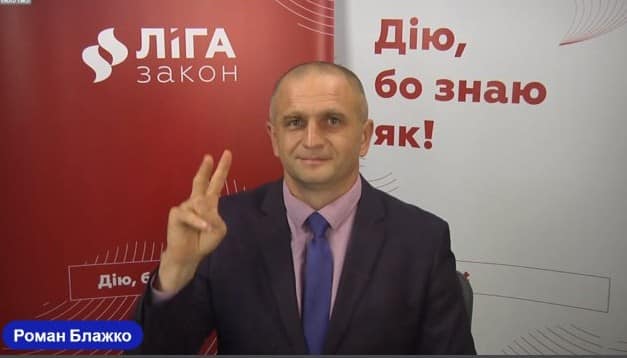
Holding webinars based on the "Liga-Zakon"  platform is always a day of pleasure for me. 

This time I was talking about tax initiatives in 2021, namely:

- tax amnesty;

- Bill No  5600; and

- the so-called tax "on Google".

As for the tax amnesty, those sufficiently lucky to have accumulated enough assets not to be automatically considered amnestied are advised to take a wait-and-see approach.

In particular, it will be expedient to wait for the Cabinet of Ministers of Ukraine to develop a Bill on strengthening control over personal income taxation. The existence of this Bill will make sure a more accurate assessment of the risks for those who do not want to apply the tax amnesty.


Monday, December 2, 2019

Tax Reform from "Servant of the People"

On 14 November 2019 I was delighted  to conduct a LIGA-ZAKON webinar on the topic of the tax reform from "Servant of the People".

During the webinar, the changes that had already been implemented and those that are just planned were considered. The former, in particular, embraced the decriminalization of fake entrepreneurship and raising the thresholds for liability for tax evasion. Among the latter, were the introduction of a single tax account,  tax amnesty, the establishment of the Financial Investigation Bureau and a number of changes related to tax administration under the Bill No. 1210-1.

In the course of the webinar, the most attention was paid to the impact of the decriminalization of fake entrepreneurship on the practice of tax dispute resolution. There are already some early court judgments following the decriminalization. Unfortunately, those judgments often give a diametrically opposite assessment of the decriminalization. Some courts do not have regard to judgments of conviction for fake entrepreneurship committed by officers of the counterparties issued before the decriminalization of fake entrepreneurship actually occurred.  Other courts, on the contrary, do not see any impediment for having regard to such judgments of conviction. 

Of particular concern is also a substitute for fake entrepreneurship found by the tax police. This is a criminal offence set forth by section 201-1 of the Criminal Code of Ukraine (forgery of documents submitted for state registration of legal entities and individual entrepreneurs). Nowadays,  the tax police tries to apply extensively this section to cases that have previously fallen under fake entrepreneurship. It is feared that over time this practice will become widespread and, accordingly, the positive effect of the decriminalization of fake entrepreneurship will be nullified.

Wednesday, August 15, 2018

4 Problematic Issues of Unified Tax in the Life of Ukrainian Farmers

Unified tax of the 4th group (formerly known as  fixed agricultural tax) is for compelling reasons selected to be paid by the overwhelming majority of Ukrainian farmers.

Below, we have summarized those major issues that arise while paying this tax.

Problem No 1 - uncertainty for the future

The base of taxation is the official appraisal of land.  In 2018, a new all-Ukrainian official appraisal of agricultural land is being carried out  (in accordance with the resolution of the Cabinet of Ministers of Ukraine dated 7 February  2018 No. 105).

If the new official appraisal of land turns out to be significantly higher than it is of today, some farmers cannot see any economical sense in keeping paying  the unified tax. They may consider switching instead to the general system of taxation, including corporate profit tax.

However, let us not rush to conclusions. We are waiting for the results of the new official appraisal of agricultural lands.

Problem 2 - the impossibility of confirming the status of a unified tax payer in the presence of a meager tax debt

If your company for certain magical reasons is identified as one having a tax debt in a funny amount of several hryvnias as of 1 January, it is very likely that the tax authorities will not confirm your status of a unified tax payer for the new year.

Fortunately, there is court jurisprudence on this issue available in favor of taxpayers. Courts can uphold the following taxpayers’ arguments:

- the presence of a small amount  tax debt does not constitute a ground for the refusal to confirm the status of the unified tax payer (for example, the ruling of the High Administrative Court of Ukraine dated  6 September 2016 in the case No. 821/354/16);

- The existence of a tax debt may be a ground for the refusal to vest a farmer with the initial status of a unified  tax payer, but it cannot be a reason for not confirming his already existent this status (the resolution of the Supreme Court of 8 May 2018 in the case No. 816/1088/17).

Problem 3 - improperly executed lease agreements

To qualify  for the unified tax, it is necessary that the share of agricultural production of the taxpayer is at least 75% of his total production. The tax authorities are trying to maintain that the 75% share of agricultural production must be carried out mandatory on land, the rights to which are properly formalized.

Consequently, if your company’s  land comprises a significant portion of  land plots with no properly formalised rental rights, there is a risk of losing the status of a unified tax payer.

Fortunately, the tax authorities do not do this quite often now. It was much more interesting for them to carry out such inspections at the time when the special VAT regime for agricultural producers was still in force. Then they were trying to deprive farmers of both the  status of the subject of the special VAT regime and the status of a unified tax (fixed agricultural tax) payer at the same time.

There is also taxpayer-favorable  court jurisprudence in this context. The courts share the view that the whole crop of the farmer  must be taken into account for the calculation of the share of agricultural production, irrespective of whether it has been grown on land parcels rights  to which have been properly or improperly executed (for example, the ruling of the High Administrative Court of Ukraine dated 6 September 2016 in case No. 808/7906/13a).

Problem 4 - cultivating hayfields and pastures

It is not uncommon for today that farmers sow grain crops on pastures or hayfields. If you do so, it would be advisable for you to pay for such parcels of land the unified tax as if for  arable land, that is, taking into account the coefficient of 1,756.

Otherwise, there will  is the risk of an additional tax assessment.

A striking example of the additional assessment is the case No. 808/2649/17, in which courts, including the Supreme Court, found for  the tax authorities. In this case the tax authorities, having analyzed the taxpayer’s form SG-29 (СГ-29),  managed to ascertain that the taxpayer had used its hayfields as arable land. As a result, the taxpayer was charged the additional unified tax, taking into account the specified coefficient of 1.756. Moreover, a 25% fine  was imposed on the taxpayer for the underreporting of the unified tax.

* - Photo from http://www.1zoom.me

Friday, August 3, 2018

Tax Component of Bankruptcy

Co-authored by Anton Havryk

Unfortunately, the Tax Code of Ukraine (hereinafter - the “Tax Code”) and the Law of Ukraine "On Renewal of the Debtor’s Solvency or Declaring Its Bankruptcy” (hereinafter - “Bankruptcy Law”) is not a well-tuned duet. There are many practical problems, when it comes to tax aspects of insolvency.

Below is the description of  three most common issues.

I. Initiation of bankruptcy procedure upon an application of the tax authorities

This question is in the first place relevant for taxmen themselves. The transfer of a tax debt from the category "not collected" to the category “being collected in the bankruptcy procedure” reduces the total taxpayers’ tax debt. This, in its turn, has a positive effect on the performance indices of the tax authorities.  

The problem exists, first and foremost, because the Bankruptcy Law (paragraph 2 of section 11) requires submitting a resolution on opening an enforcement proceeding as a prerequisite for the initiation of a bankruptcy procedure. There is also a requirement of the Bankruptcy Law that a three-month time-limit must elapse before the initiation of a bankruptcy proceeding is made starting from the date of the submission of the execution order for its enforcement.

As generally known, the procedure for collecting a tax debt does not entail the receipt of an execution order. For the sake of a tax debt to be collected based on the already rendered court judgement, the tax authorities address directly the bank of the taxpayer with their own collection order.  No resort to to the State Enforcement Service is needed on the part of the tax authorities.

Very fortunately for the tax authorities, courts do them a big favour by holding that in the case of the initiation of  a bankruptcy proceeding at the instance of the tax authorities the submission of a resolution on opening an enforcement proceeding is not  not mandatory.

The resolution of the High Economic Court of Ukraine (hereinafter - the “HECU”) of 17 February 2015 in case No 925/1941/14 is a striking example of such tax authorities-favorable court jurisprudence.  

II.  VAT on selling a bankrupt’s assets in a liquidation procedure

To date, the situation surrounding the VAT treatment on selling assets in a liquidation procedure continues to be controversial.

In particular, the HECU in its resolution dated 16 May 2012 in case No 25/112/10 ruled that during the sale of a bankrupt's assets in the liquidation procedure, the bankrupt incurs no output VAT.

Note that paragraph 1 (4) of section  38 of the Bankruptcy Law expressly provides that from the date of the adoption by the economic court of a ruling on declaring bankruptcy and opening of a liquidation procedure, the bankrupt does not incur any additional obligations (including taxes), except for the costs directly related to the implementation of the liquidation procedure.

At the same  time, the tax authorities support quite an opposite view. They treat the sale of of a bankrupt’s assets in the liquidation procedure as a VAT taxable transaction.

Paragraph 7.3 of section  7 of the Tax Code is a rather strong argument to bolster their position. Under this paragraph, no tax issue can be governed or changed by a  Law (Act) apart from that amending the Tax Code.

The aforesaid paragraph 4 part 1 of section  38 of the Bankruptcy Law is not incorporated into the Tax Code. Consequently, it cannot be considered as one exempting the transactions in question from VAT.

In practice, liquidators usually do not pay VAT when selling the assets of a bankrupt. However, the specified uncertainty has always been the  "Sword of Damocles" hung over the heads of the liquidators. There is always a risk of bringing the liquidators to criminal liability for tax evasion.

In 2015 there was an attempt to solve this problem on the legislative level. The Bill No  3164 dated 22 September 2015 “On Amendments to Section 184 of the Tax Code of Ukraine” was developed. The amendments  were concerned with subparagraph (d) of paragraph 184.1 of the Tax Code. According to the amendments the VAT deregistration  of a taxable person would have occurred not on the basis of a court order on the liquidation of that taxable person, but on the basis of a court order on the recognition of that taxable person a bankrupt.

However, for unclear reasons the Bill has been withdrawn, and the problem remains.

As of today, the work on eliminating the above discrepancy  continues on the legislative level. At present, the Tax and Customs Law Committee on of the Ukrainian Bar Association is working on a new Bill on amendments to the Tax Code.

III. Inclusion of the tax authorities’ claims to a register of creditors

There are three aspects of the problem.

First, is it possible to include to a register of creditors the tax authorities’ claims if the underlying tax liabilities are not due and payable yet?

Most economic courts take an unambiguous position that the tax authorities’ claims supported by not effective tax liabilities (including disputed notices of tax assessment) must not be  included in a register of creditors. The only tax debt which is either a tax liability agreed upon by the taxpayer himself or established by the court can be included in the register of creditors.  In particular, this position is articulated by the High Economic Court of Ukraine in its following resolutions: dated 20 December 2011 in the case No 5015/118/11; dated 8 October 2013 in case No 914/77/13 and dated 1 July 2015 in the  case No 914/1820/14.  

Second, what to do if the liquidation procedure is already over, but the tax liability has not yet become due and payable?

Sometimes, courts nevertheless include to the register of creditors tax liabilities that are not yet due and payable. However, if the court takes a position that a tax liability must become due and payable before being included in the register of creditors, then the liquidation procedure may end and the tax liability may not get to the register of creditors at all. If this is the case, the tax authorities will be able to write off such a tax liability as a  bad tax debt.

Third, a highly contentious question is how to treat the tax authorities’ claims whose underlying tax liabilities become due and payable after the opening of the bankruptcy proceeding.

In particular, this situation arises where  a notice of tax assessment was issued by the tax authorities before the opening of the bankruptcy proceeding. The taxpayer challenged the notice of assessment within the scope of the administrative or court  procedure. The appeal turned out to be unsuccessful for the taxpayer and the underlying tax liability became due and payable, but after the opening of the bankruptcy proceeding.

The question is whether such claim of the tax authorities should be counted as competitive or current insolvency claims?

On the one hand, it seems that such claims should belong to competitive insolvency claims. This conclusion can be drawn from the fact that the claims had arisen (the relevant notice of tax assessment had been issued) before the opening of the insolvency proceedings.

On the other hand, such claims became due and payable after the opening of the insolvency proceeding. Thus, they seem to be viewed as current insolvency claims.

Unfortunately,  there has not been enough court jurisprudence so far to give comprehensive answers to these difficult questions.
In the meanwhile, to say that there is no court jurisprudence at all is to say nothing.

An extremely interesting piece of court jurisprudence in this  context is the resolution of the HECU of 11 July 2012 in the case No 18/85 on the bankruptcy of  Molochna Rivyera, LLC.

In this case the HECU:

- acknowledged the claims of the tax authorities to pay tax liabilities, which became due and payable  after the opening of a bankruptcy proceeding to be competitive insolvency claims; and

- pointed out to the failure of the tax authorities to comply with a deadline set out for submitting competitive insolvency claims (the tax authorities submitted those claims after the underlying tax liabilities became due and payable in the liquidation procedure, rather than within the prescribed deadline in the administration of property procedure).

In lieu of conclusion

In sum,  bankruptcy  does really have a substantial tax component. Even despite the new, much more progressive wording of the Bankruptcy Law that took effect on  18 January 2013, there are still a great many tax problems in the area of bankruptcy.

Wednesday, January 17, 2018

Tax Amendments under New Year Tree of 2018


Co-authored by Anton Havryk

The end of 2017 has not been an exception in terms of brining amendments to the tax legislation to be in effect from the beginning of 2018.

In the continuation of the “good” long-standing tradition  just few days before the New Year’s Eve, the President of Ukraine signed the Law of Ukraine "On Amendments to the Tax Code of Ukraine and Certain Statutory Instruments of Ukraine on Ensuring the Balanced State Revenues in 2018".  The Law was officially published on 30 December 2018.

The Law provides for a large number of changes to the tax legislation. Below is a very brief summary of the most important of these changes.

VAT - the suspension of registration of VAT invoices. Quite a major reform is being accomplished in the area of the suspension of the registration of VAT invoices. In short, the essence of the reform can be boiled down to as follows.

The system of the suspension of the registration of VAT invoices stopped its functioning following the entry into force of the Law. The system will resume its operation after the approval by the Cabinet of Ministers of Ukraine of a new procedure governing the suspension of the registration of VAT invoices. The Cabinet of Ministers of Ukraine is supposed to adopt the new procedure by 1 March 2018. However, there are some doubts whether the Cabinet of Ministers of Ukraine will be able to do it on time.

Rather favorable transitional provisions are envisaged for VAT invoices the registration of which has been already suspended, but the decision to decline their registration has not been issued yet by the tax authorities.De pending on the date (before or after December 1, 2017) at which the taxable person provided explanations/documents for the restoration of the registration, the registration can be either completely automatic or must be carry out after the expiry of five business days set aside for the consideration of such explanations/ documents.

VAT - the abolishment of VAT refund on the exportation of oilseeds.  The exportation of soybeans will be exempt from VAT from 1 September 2018 to 31 December 2021. The exportation of yellow rocket seeds and rapeseeds will be exempt from VAT from 1 January 2020 to 31 December 2021.

The above VAT exemptions will result in the abolishment of VAT refund on  exportation of the aforesaid oilseeds.

It is worthy of note that initionaly the draft law provided for VAT exemption (canceling VAT refund) on the exportation of sunflower seeds, rapeseeds and soybeans from 1 March 2018. As far as we understand,  under the increasing pressure of the strong Ukrainian agrarian lobby these provisions have been seriously alleviated at the stage of the adoption of the final wording of the law.

VAT - exemption in case of non-commercial importations of goods into the customs territory of Ukraine (hand luggage, passenger luggage, international mail and express shipments). Special rules have been established to combat abuses related to the use of the aforesaid  VAT exemption on commercial purposes (fairly common practice as of  today).

Restrictions are tied up to the frequency of the departure of persons transporting goods from abroad and the frequency of receiving international shipments. For example, the VAT exemption available for international shipments priced at no more than EUR 150  only works for first three shipments per month. The value of all the three first shipments are cumulated for the purposes of the exemption. The exemption is to be  granted only to the extent that the summed up value of the first three shipments during the calendar month does not exceed of EUR 150.

VAT - exemption for the supply of "electrocars". A VAT exemption is provided for the importation and domestic supplies of automobiles propelled by electric motors. The exception is of a temporary nature to be in force for the entire 2018. We can expect electric cars to fall in price by 20%!

Transfer pricing. Considerable changes to the transfer pricing rules have been made. Of those changes, it is worthwhile to mention the adjustment of the criteria for controlled transactions as well as the introduction of new requirements for the contents of transfer pricing documentation.
Excise tax, environmental tax, rent charge.  The rates of these taxes have been increased.

Friday, August 12, 2016

Major Tax Amendments 2016

The following is a brief overview of the amendments to tax legislation effective from the beginning of 2016.

Corporate Income Tax

- Returning to the quarterly taxable period is made. The annual taxable period is now only possible for certain agricultural producers and taxpayers whose previous year revenue did not exceed UAH 20 mln.

- Monthly advance payments are abolished. The tax is to be remitted after filing relevant tax returns. However, there is still one advance payment to be discharged in 2016. In particular, by the end of the fourth quarter the taxpayer will have to remit an advance payment amounting to 2/9 of its tax liabilities calculated for the three quarters of 2016 (one can see some analogy here to a 11 month taxable period existing a few years ago).

Personal Income Tax

- A flat rate of 18% replaces the progressive rate of 15/20% being previously in existence;

- The procedure for remitting advance payments by individual entrepreneurs subject to the general system of taxation is changed. The basis for their calculation is now the preceding quarter, rather than the preceding year. Moreover, an advance payment is no more needed for the fourth quarter.

Single social contribution (SSC)

- 3.6% SSC imposed on employees is abolished.

- The rate of SSC levied on employers is significantly reduced from 36.76 - 49.7% to 22%.

- The maximum amount of income chargeable to SSC increases from 17 to 25 living wages (UAH 36 250 as of August 2016).

VAT

- The absence of a taxable person at his registered office does not make up a ground for his involuntary VAT deregistration anymore.

- The rules on the determination of the tax base for self-produced goods/services are changed. While in past it had to be not lower than their cost, at present it must not be below the applicable usual (market) prices.

- The rules on taxing the sale of mortgaged and pledged property by banks and other financial institutions are clarified. In regardless of whether such property is acquired from taxable or non-taxable persons, it is taxed under the "margin" scheme. What is taxed is the surplus between the selling price of the property and the value at which the property has been earlier received by a bank or another financial institution into their ownership in consequence of the enforcement of the debt.

- A fine for mistakes made in VAT invoices is introduced (previously there was only a fine for the delayed registration of VAT invoices).

- A VAT exemption for the exportation of the majority of grain and industrial crops is removed. The latter made impossible VAT refund on such transactions in the past thereby lowering prices at which export trading companies were buying grain and industrial crops from domestic players.

- VAT refund mechanism is changed to a large extent. While formerly there were two VAT refund procedures, general and automatic (accelerated), for now there is only one refund procedure in place. Under the new rules, VAT refund is provided based on the results of a desk audit. Documentary audits are also possible, but only in two cases expressly provided for in the Tax Code of Ukraine. In particular, documentary audits are possible with regard to:

1) The amounts of VAT refund previously unconfirmed by documentary checks for taxable periods prior to 1 July 2015 (the beginning of the full-mode operation of the system of blocked VAT-accounts) and

2) The amounts of VAT refund arising from prior to 1 January 2016 purchases of goods/services from taxable persons subject to the special VAT treatment of agricultural producers.

The new system provides for the simultaneous existence of two public registers of VAT refund applications (the registers are available on the website of the State Fiscal Service of Ukraine at http://sfs.gov.ua/diyalnist-/vidshkoduvannya-pdchv/povidomlennya-pro-reestri-zayav/240063.html).

Under the amended rules, VAT refund is to be given in the chronological order according to the time at which the VAT refund application has been entered into one of the registers. The most "mysterious" component of the new system is the introduction of two, rather than one, registers of VAT refund applications. This is without specifying any priority for getting the requested VAT refund out of the either particular register.

The first register accommodates VAT refund applications of taxable persons being compliant with certain criteria set out by the Tax Code of Ukraine. The criteria are outwardly very similar to those formerly envisaged for automatic VAT refund. The second register accommodates all other VAT refund applications, i.e. those coming from taxable persons who do not meet the said criteria.

- A clear 15 day time-limit is established for conducting, based on the complaint of the purchaser, the documentary unscheduled audit of the supplier failing to register its VAT invoice or making a mistake in its mandatory details.

- A rule is introduced whereby minor errors in the wording of VAT invoices do not comprise anymore an obstacle for the purchaser to enjoy its input VAT deduction.

- Significant restrictions are introduced for the beneficiaries of the special regime of VAT taxation for agricultural manufactures (indirect subsidy). The beneficiaries are no more able to keep all the due VAT (surplus of output VAT over input VAT), instead of remitting it to the tax revenues. At present, they are only allowed to keep the following parts of the due VAT:

1) 15% - for operations with grain and industrial crops;

2) 80% - for livestock operations;

3) 50% - for other operations.

Unified tax

- The maximum allowed revenue for the third group of taxpayers is lowered from UAH 20 mln to UAH 5 mln.

- The tax rate for the third group of taxpayers is raised from 2% to 3% (for those who pay extra VAT) and from 4% to 5% (for those who are VAT-registered persons).

- For the fourth group taxpayers (agricultural producers), the requirement regarding the proper execution of the lease/ownership rights to the land is abolished.

- Tax rates for the fourth group of taxpayers (agricultural producers) are raised.

Administration

- The procedure for the settlement of tax liabilities against the overpaid tax is improved. Main changes relate to the introduction of an automatic settlement (no application is required on the part of the taxpayer) which is now available for settlements conducted within the scope of the same tax, as well as the possibility to use claimed VAT refund for settling against other taxes liabilities.

Miscellaneous

- An electronic system of administration of excise tax levied on fuel sales is introduced (from 1 March 2016 the system works in a test mode and from 1 April 2016 it works in a full mode).

- An additional tax on real estate in the annual amount of UAH 25,000 is introduced for owners of apartments with floor space over ​​300 square meters and houses with floor space over 500 square meters.

- The scope of transport tax is modified. This now includes cars not older than 5 years not depending on their engine capacity, but depending on their market value. In particular, car whose market value is more than 750 times the minimum statutory salary (about UAH 1 mln as of 2016) are chargeable to transport tax.